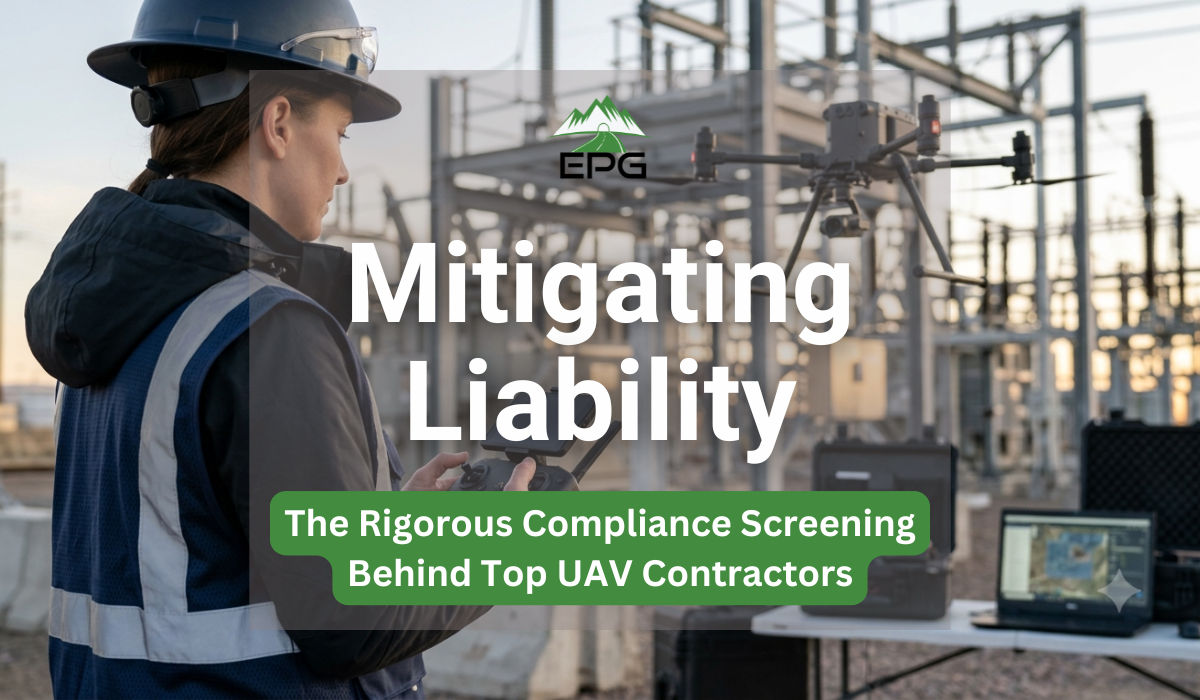
Mitigating Liability: The Rigorous Compliance Screening Behind Top UAV Contractors
Summary
For enterprise procurement and hiring managers in the drone and UAV industries, managing third-party operational risk is critical. While an FAA Part 107 certificate establishes basic legal compliance, it does not evaluate practical corporate safety protocols, airspace risk management, or data sovereignty. True operational security requires vetting UAV contractors on proactive compliance literacy, site-specific risk assessments, and adherence to emerging federal frameworks like the FAA’s newly proposed 14 CFR Part 74 Unmanned Aircraft Flight Restrictions (UAFRs) for critical infrastructure. Elevating screening parameters from standard flight proficiency to ironclad liability mitigation protects corporate brand assets, ensures insurance coverage validity, and prevents catastrophic project delays.
The Invisible Risk in Commercial Drone Operations
A licensed drone pilot with thousands of recorded flight hours looks exceptional on paper. However, if that contractor violates federal airspace or mismanages a site-specific risk assessment, those accumulated flight hours will not protect your company from a severe Federal Aviation Administration (FAA) fine, civil litigation, or a massive insurance dispute.
In today’s commercial UAV landscape, a pilot is no longer just an RC hobbyist operating a remote device – they are an airborne data collector operating within highly regulated, complex corporate environments. When deploying unmanned systems over multi-million dollar construction projects, industrial plants, or critical infrastructure, operational failure carries high stakes. True risk mitigation requires vetting candidates on their baseline compliance literacy and institutional risk management protocols, rather than focusing solely on how smoothly they handle the control sticks.
Section 1: Why a Standard “Part 107 License” is Only the Baseline
The rapid expansion of the commercial drone market has introduced a significant operational bottleneck for enterprise hiring managers: the “paper-certified” pilot. Passing the FAA Part 107 written examination allows an individual to legally operate a small unmanned aircraft system (sUAS) for commercial purposes, but it functions strictly as a theoretical baseline. It does not test real-world corporate safety habits, emergency maneuvering, or institutional compliance protocols.
Thousands of newly certified pilots enter the labor market daily, yet many lack the field experience required to execute highly complex technical workflows. When integrated into an enterprise environment, these operators frequently struggle with mandatory, real-world tasks:
-
Real-Time Airspace Coordination: Navigating complex local airspace constraints and executing immediate adjustments when near active, dynamic job sites.
-
Remote ID Infrastructure: Managing active Remote Identification (Remote ID) broadcasts and troubleshooting telemetry errors before a flight begins, ensuring full compliance with current FAA tracking mandates.
-
Rigorous Equipment Lifecycle Maintenance: Documenting and tracking structured maintenance logs, battery cycle degradations, and firmware updates across a diverse fleet of enterprise-grade aircraft.
At EPG, we treat the Part 107 license as a strict prerequisite, not a final qualification. Our vetting framework is designed to filter out passive operators and identify elite contractors who actively practice preventative risk management. We analyze the workflows behind the license to ensure every contractor placed on an enterprise project operates with the precision of a commercial aviator.
Section 2: The Three Non-Negotiable Compliance Pillars We Screen For
To protect your operational timeline and insulate your organization from liability, our talent acquisition process evaluates candidates against three distinct compliance pillars. This methodology ensures your project’s technical bottlenecks are addressed without introducing unnecessary legal or operational friction.
Tri-Axis Compliance Screening Matrix
This technical screening framework isolates elite candidates by explicitly auditing three operational compliance dimensions before a UAV contractor is ever deployed to your job site:
| Screening Dimension | Focus Area | Operational Deliverable |
|---|---|---|
| Pillar A: Airspace Mastery | LAANC Navigation & Real-Time ATC Concurrence | Eliminates costly scheduling delays near restricted, complex commercial flight corridors. |
| Pillar B: Site-Specific Risk | Micro-Weather Analysis & Ground Hazard Audits | Proactively mitigates physical liabilities before the aircraft ever leaves its transport case. |
| Pillar C: Data Sovereignty | Local Encrypted Storage & Visual Containment | Prevents accidental intellectual property leaks or unauthorized foreign cloud syncing. |
Pillar A: Airspace Mastery and Authorization Protocol
Can your drone contractor independently navigate controlled airspace without relying on external administrative support? Evaluate a candidate’s functional mastery of the Low Altitude Authorization and Notification Capability (LAANC) ecosystem. Top-tier contractors must demonstrate how they secure rapid airspace approvals near active flight zones and coordinate directly with Air Traffic Control (ATC) when waivers are required. If a pilot cannot efficiently handle complex airspace boundaries, your multi-million dollar project risks being grounded by preventable scheduling delays.
Pillar B: Strict Adherence to Site-Specific Risk Assessment
Operational safety is built entirely on pre-flight discipline. Filter for candidates who possess a formalized, documentable routine for pre-flight safety mapping. This includes conducting micro-weather trend analysis, identifying local electromagnetic interference (EMI) hazards, mapping structural obstacles, and establishing clear ground-hazard buffer zones before an aircraft ever leaves its case. Screening isolates operators who actively anticipate worst-case variables rather than reacting to them mid-flight.
Pillar C: Data Sovereignty and Privacy Compliance
Deploying advanced sensors over industrial, commercial, or utility environments means proprietary intellectual property, facility layouts, and sensitive corporate data will be captured on camera. Explicitly screen for operators who understand modern data security and sovereignty protocols. This ensures contractors know how to handle sensitive visual assets, utilize secure local storage over unencrypted cloud transfers, and implement tight operational discipline to prevent accidental leaks or the unauthorized exposure of client property visuals.
Section 3: Protecting Your Corporate Brand Assets
The reality of corporate procurement is clear: if a third-party drone contractor causes a collision, breaches public privacy rules, or enters a restricted zone, the public headlines will not feature the independent contractor’s name. They will feature yours.
This operational vulnerability is heightened by recent regulatory shifts. The FAA’s proposed 14 CFR Part 74 Unmanned Aircraft Flight Restrictions (UAFRs) framework establishes legally enforceable, low-altitude no-fly zones directly over permanent, fixed-site critical infrastructure across 16 distinct sectors (including energy, chemical, transportation, and commercial facilities). Navigating these tightening security perimeters requires an advanced understanding of regulatory compliance.
Protect your corporate brand by conducting detailed audits of each candidate’s historical flight records, safety logs, and regulatory compliance history. Verify that every pilot sent to your site fully comprehends corporate liability boundaries, local statutory restrictions, and modern safety frameworks. This vetting process ensures that your external UAV contractors remain sophisticated assets to your brand rather than hidden legal liabilities.
Conclusion: Vetting for the Worst-Case Scenario
High-performing enterprise drone programs are not built on flashy hardware or marketing buzzwords; they are built on ironclad corporate compliance and disciplined risk management. Vetting pilots for their worst-case scenarios before they arrive on-site is the only reliable method to safeguard your operational investments.
Partnering with a specialized talent acquisition agency like EPG ensures your engineering, legal, and insurance teams are fully insulated from catastrophic project failures. We manage the technical compliance screening so you can focus on leveraging the actionable data your UAV program was built to deliver.
Frequently Asked Questions (FAQs)
1. How does the FAA’s proposed Part 74 (UAFR) framework impact our day-to-day commercial drone operations?
The proposed 14 CFR Part 74 rule allows eligible fixed-site critical infrastructure facilities to request formal Unmanned Aircraft Flight Restrictions (UAFRs) up to 400 feet AGL directly over their property lines. Commercial pilots operating nearby must be trained to identify these restricted zones, broadcast consistent Remote ID telemetry, and coordinate advance notice with facility managers to ensure they do not incur civil or criminal penalties.
2. Why isn’t a clean FAA Part 107 safety record enough to guarantee a pilot is safe for enterprise sites?
The FAA’s Part 107 record tracks reported, major safety accidents and formal regulatory violations. It does not track near-misses, poor equipment maintenance habits, inadequate site risk assessments, or minor data security oversights. A deep compliance screening evaluates these proactive operational habits to ensure a pilot follows enterprise-level safety procedures.
3. What specific data security protocols should an enterprise-grade UAV pilot understand?
An enterprise-grade operator must understand data encryption standards, secure firmware updates, and the risks associated with automatic cloud-syncing to foreign or unencrypted servers. They should be proficient in air-gapping equipment when working on proprietary corporate sites to ensure all captured visual and geospatial data remains entirely within your company’s internal control.
Optimize Your UAV Workforce Compliance
Don’t let a compliance oversight ground your drone program or expose your company to legal liability. Partner with EPG to secure vetted, compliant, and highly skilled UAV specialists tailored to your specific operational needs.
Ready to secure your operations? Choose an option below to connect with our industrial talent experts:
-
📝 Submit Your Talent Requirements via HubSpot
About the Author: EPG