Building the BESS Workforce in Nebraska: How Public Power Utilities Are Solving the Energy Storage Talent Shortage
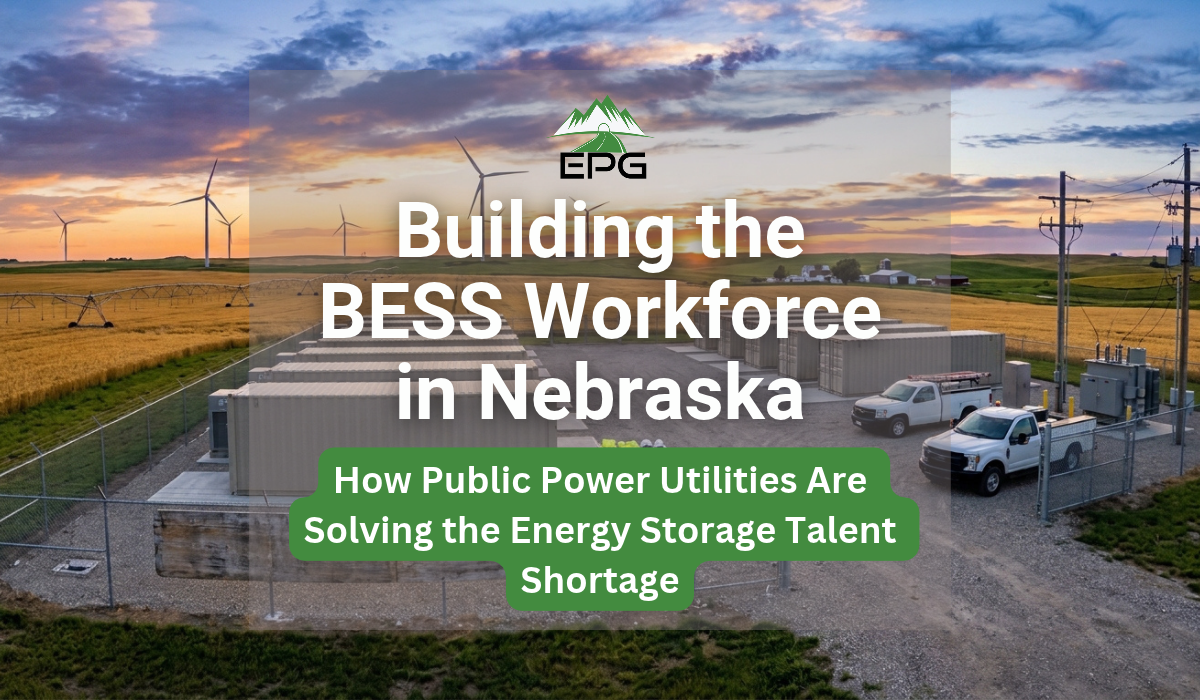
Nebraska is expanding utility-scale Battery Energy Storage System (BESS) capacity to meet rising industrial demand. However, regional energy leaders now face an unprecedented technical talent shortage. Nebraska relies on consumer-owned public power districts like OPPD, LES, and NPPD. Unlike volatile merchant markets, these utilities prioritize long-term grid stability, safety compliance, and multi-decade asset reliability. To scale successfully, energy leaders must pivot their hiring strategies. Facilities need specialized engineering and operational leads skilled in high-voltage DC architectures, SCADA integration, and proactive maintenance.
The Quiet Transformation: Why Nebraska’s BESS Market Demands a Specialized Talent Strategy
Nebraska’s energy storage landscape operates under a structured, long-term operational framework driven by grid modernization mandates, rural electrification reliability, and accelerating power demand from hyper-scale data centers across eastern Nebraska. Across the state, public power utilities are systematically expanding their Battery Energy Storage System (BESS) capacity. Recent milestones, such as the Lincoln Electric System (LES) 2nd & N BESS project, demonstrate this active buildout, utilizing innovative non-lithium, zinc-based battery architectures for localized grid resilience.
In a state governed entirely by consumer-owned public power districts, such as OPPD, LES, and NPPD, the primary directive focuses on 20-year asset reliability, safety compliance, and seamless grid interconnection. Recent statutory momentum, including Legislative Bill 1010 (LB 1010) and LB 1261, has codified state rules for Energy Storage Resources (ESRs), establishing clear regulatory oversight through the Nebraska Power Review Board while encouraging utility-scale storage deployment.
Public power utilities and EPC contractors face a critical bottleneck when deploying multi-megawatt storage assets. Traditional power plant experience does not automatically translate to advanced battery architectures. Consequently, sourcing dedicated Commissioning and O&M leaders has become a top hiring priority across the region.
The Technical Talent Need: Why Generic Electrical Engineering Falls Short
Nebraska energy executives face a major hiring challenge with legacy power engineers transitioning into BESS operations. Generic backgrounds often lack direct experience with high-voltage DC architectures and digital control logic.
While traditional substation engineering provides a strong foundation, modern battery energy storage requires deep technical specialization across interconnected domains:
-
Energy Management Systems (EMS) & SCADA: Modern utility storage relies on real-time SCADA controls and PLC logic to manage frequency regulation and peak shaving. Engineers must understand how software control layers communicate with physical battery management systems (BMS).
-
Thermal Management & Power Electronics: Inverters and DC/AC conversion units operate under strict thermal constraints. Finding engineers who understand liquid cooling loops, ambient operating thresholds, and bidirectional power conversion is critical to preventing forced outages.
-
Inverter Control Logic: Deploying grid-forming versus grid-following architectures requires specialized power systems experience. This expertise ensures system stability during islanding or black-start conditions.
Key Takeaway for Hiring Managers: Sourcing candidates with combined experience in high-voltage DC infrastructure and digital twin monitoring is essential. These specialized leads ensure your facility operates efficiently from Day 1.
Navigating Compliance & Risk in Public Utility Siting
Safety and regulatory compliance form the cornerstone of Nebraska’s energy storage rollout. Public power boards, fire authorities, and regulators like the Nebraska Power Review Board demand strict safety controls before ground breaking.
Building out an experienced operations and engineering team requires leaders who are well-versed in national safety standards and thermal safety engineering:
-
NFPA 855 Compliance: Expertise in stationary storage safety standards is mandatory. It guides required separation distances, explosion protection, and hazard mitigation analysis (HMA).
-
UL 9540 & UL 9540A Certification: Hiring personnel who understand unit-level and thermal runaway fire testing ensures smooth permitting with local Authorities Having Jurisdiction (AHJs).
-
Thermal Runaway Mitigation & Fire Suppression: Facilities require multi-layered safety protection, including gas detection and deflagration venting. Systems must also feature clean-agent or water-based fire suppression engineered for advanced chemistries.
Deploying safety-critical design principles protects your capital investment and maintains public trust, a fundamental requirement for public power entities.
Building the Local Pipeline: Industry Leaders, Legislation, and Academic Partnerships
Sourcing senior technical talent in Nebraska requires a deep understanding of the regional developers, local EPCs, and academic institutions driving the state’s energy transformation:
-
Nebraska Developers & Turnkey Partners: Local clean energy firms like Omaha-headquartered Bluestem Energy Solutions and Sandhills Energy specialize in utility-scale and community solar-plus-storage development, creating steady demand for project management, interconnection, and asset management talent.
-
Regional EPCs & O&M Leadership: Dedicated regional contractors like ISI Solar (Interconnection Systems Inc.), based out of Central City, NE, lead hands-on design, construction, and long-term O&M (Operations & Maintenance) execution across Nebraska. Finding experienced field technicians and commissioning leads capable of supporting these turnkey EPC operations is essential.
-
National Developers & Independent Power Producers (IPPs): Industry giants such as NextEra Energy Resources, Invenergy, and EDP Renewables continue to expand utility-scale wind, solar, and co-located BESS assets across the Southwest Power Pool (SPP) footprint in Nebraska, competing directly for senior SCADA, high-voltage electrical, and power electronics talent.
-
Legislative Framework (LB 1010 & LB 1261): Recent statutory updates passed by the Nebraska Legislature codify legal frameworks for Energy Storage Resources (ESRs). By clarifying Nebraska Power Review Board approval processes and grid interconnection rules, these updates give public power districts and private developers clear operational pathways.
-
University Research & Engineering Pipelines: Top-tier power electronics and smart grid engineering talent is cultivated locally through institutions like the University of Nebraska–Lincoln (UNL) and its Power & Energy Systems Laboratory (PESL).
-
Technical Trade & Certification Colleges: For hands-on commissioning and operational roles, regional institutions such as Southeast Community College (SCC) and Metropolitan Community College (MCC) provide specialized trade programs in industrial automation, PLC programming, high-voltage electrical safety, and SCADA technician training.
Operational Longevity: Protecting the 20-Year Asset Lifecycle
The ultimate success of a BESS installation in Nebraska relies on long-term performance guarantees and capacity retention. Sourcing top-tier Commissioning and O&M talent early is essential. It serves as your best insurance policy against unexpected degradation and costly downtime.
BESS Asset Lifecycle & Performance Pathway
Proactive commissioning & O&M milestones for 20-year grid reliability
The Role of Elite Commissioning & O&M Talent:
-
Commissioning Leadership: Leads factory testing (FAT), site testing (SAT), and IEEE 1547 grid interconnection compliance before commercial operation.
-
State of Health (SoH) Modeling: Uses digital twin software to monitor cell balance, state of charge, and capacity fade.
-
Asset Management & Warranty Enforcement: Tracks cell metrics against OEM guarantees to enforce warranty obligations across the asset’s lifecycle.
Frequently Asked Questions
Why is Commissioning and O&M talent in such high demand for Nebraska BESS projects?
Nebraska’s public power utilities focus heavily on long-term reliability and 20-year asset health. Specialized Commissioning and O&M professionals ensure systems meet strict utility standards and pass safety inspections. This proactive approach maintains optimal State of Health (SoH) and prevents premature battery degradation.
What technical skills should Nebraska energy companies look for in BESS operational hires?
Key technical proficiencies include hands-on experience in the following core areas:
-
SCADA and PLC control logic
-
Energy Management Systems (EMS) and power electronics
-
Thermal management systems and DC/AC conversion
-
Safety frameworks such as NFPA 855 and UL 9540
How does technical recruiting help overcome the BESS talent shortage?
Top BESS candidates rarely browse public job boards. To solve this, Elevation Proving Grounds (EPG) maintains deep, passive networks of proven battery talent. We connect you directly with experienced commissioning leads and O&M directors to fill critical roles fast.
Secure Your Energy Storage Talent Pipeline with EPG
Finding experienced talent capable of navigating the technical, safety, and operational demands of utility-scale BESS projects requires an industry-focused recruitment partner.
At EPG, we specialize exclusively in sourcing elite engineering, operations, and leadership talent for the clean energy, battery storage, and utility sectors. Whether you need specialized Commissioning Engineers, O&M Managers, or SCADA & Controls Specialists in Nebraska or across the Midwest, our team delivers pre-vetted professionals ready to lead your projects.
Ready to Build Your BESS Team?
-
📝 Fill Out Our Employer Contact Form
About the Author: EPG