Why Virginia’s “Data Center Alley” is Driving a High-Voltage Talent Scramble in the BESS Industry
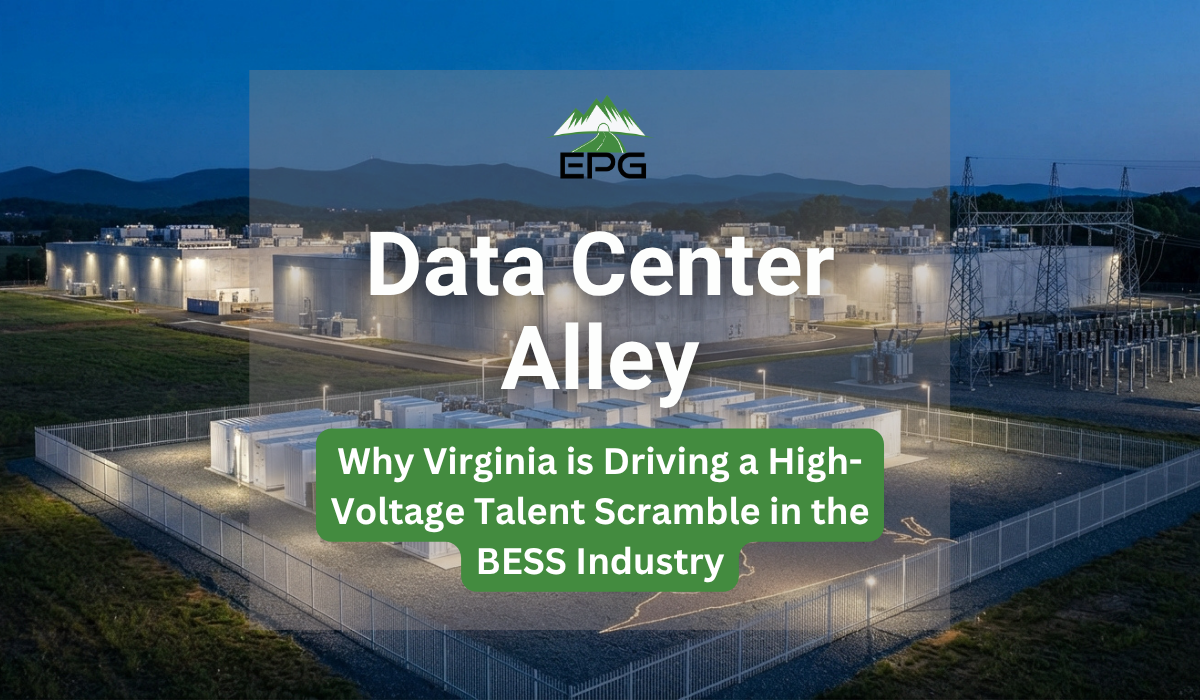
Article Overview: This article explores how explosive hyperscale data center expansion in Northern Virginia’s “Data Center Alley” is reshaping the PJM Interconnection grid. It targets energy industry recruiters and hiring managers by identifying critical talent bottlenecks in power electronics, grid-forming controls, and high-voltage engineering necessary to manage massive data center load profiles, framed within Virginia’s latest regulatory milestones and regional talent pipelines.
Northern Virginia is the undisputed epicenter of global digital infrastructure. Housing more than 35% of all known hyperscale data centers globally – boasting roughly double the data center capacity of its nearest global competitor – the region faces a compounding grid reliability challenge.
Unlike merchant-heavy markets driven primarily by trading volatility, Virginia’s energy constraints are defined by hyper-scale load growth. With PJM Interconnection forecasting unprecedented peak demand surges, the region is accelerating its focus toward sophisticated Battery Energy Storage Systems (BESS). This shift is further fueled by landmark state legislation expanding procurement targets and localized rules – such as Fairfax County’s strict zoning framework for large-scale energy storage.
For energy recruiters and clean-tech hiring managers, finding engineers who understand the unique dynamics of high-density load management, strict safety standards, and regional compliance has become the ultimate competitive advantage.
The Hook: Hyper-Scale Load Growth, PJM Pressures, and New Virginia Mandates
In regions like ERCOT, market design rewards fast-acting response to price volatility. In contrast, the PJM Interconnection market – and specifically the Dominion zone servicing Northern Virginia – is grappling with an acute physical capacity crunch driven by relentless data center expansion.
Recent grid events and multi-gigawatt load shifts have exposed the fragility of managing extreme power densities. To keep pace, developers are integrating storage under state-level frameworks like expanded utility procurement goals, alongside county-specific zoning requirements (such as Fairfax County’s mandate requiring special exceptions, robust setbacks, and noise compliance for large-scale BESS). As developers rush to meet these localized standards, navigating compliance is a moving target that requires specialized operational insight.
The Talent Need: Why Generic Electrical Engineering Falls Short
When data center campuses routinely pull hundreds of megawatts, standard electrical engineering talent isn’t enough. Engineering leaders are hunting for specialists capable of designing systems that interface seamlessly with local substations and uninterruptible power supplies (UPS).
The primary recruitment bottleneck lies in sourcing talent skilled in Power Electronics and DC/AC Conversion. Furthermore, because data centers cannot afford frequency deviations or voltage spikes during faults, hiring managers are heavily prioritizing talent proficient in advanced Grid-Forming Controls and BMS Architecture to ensure sub-second response capabilities.
Interconnection & Compliance: Navigating the PJM Bottleneck
Getting storage and backup assets online in PJM requires navigating complex queue dynamics and stringent regulatory compliance. With heightened regulatory scrutiny on ride-through capabilities and safety, engineering teams must design systems that comply with rigorous codes.
Compliance is no longer an afterthought. Talent with a deep working knowledge of NFPA 855 and UL 9540 safety codes, alongside familiarity with IEEE 1547 interconnection standards, commands top dollar. Recruiters who can source regulatory-fluent project engineers and interconnection managers give their client companies a distinct time-to-market advantage.
Operational Risk & Longevity: Moving Beyond Nameplate Capacity
In mission-critical data center environments, nameplate capacity means nothing if a system degrades prematurely under high cycling stress. Against the backdrop of PJM’s tightening reliability rules and Virginia’s aggressive new multi-gigawatt BESS procurement mandates, asset owners are shifting their focus toward long-term asset health, demanding predictive tools that prevent catastrophic failures before they occur.
This has triggered a surge in demand for specialists skilled in Thermal Runaway Mitigation, State of Health (SoH) Modeling, and advanced Energy Management Systems (EMS). Hiring managers want professionals who can deploy predictive maintenance strategies to guarantee performance over multi-decade lifecycles.
The Talent Pipeline: Where Virginia’s BESS Workforce Originates
Solving the high-voltage engineering deficit in Northern Virginia requires looking closely at regional educational and talent pipelines. Because generic electrical engineering curriculums rarely cover specialized grid-forming architecture or utility-scale DC/AC conversion, top-tier developers and EPC firms actively recruit from regional hotspots:
-
Academic & Engineering Centers: Programs coming out of institutions like Virginia Tech and the University of Virginia (UVA) produce a high volume of electrical, mechanical, and computer engineers specializing in power systems.
-
Technical Upskilling & Certification: With localities enforcing stringent safety codes (such as NFPA 855 and local building codes incorporating NEC Article 706), regional institutions offering professional certifications are becoming critical. Forward-thinking employers partner with these programs to retrain traditional electricians for battery-specific safety and thermal management roles.
-
The Regional Employer Ecosystem: From major utilities like Dominion Energy to specialized clean-tech integrators across Loudoun and Prince William counties, the competition for certified talent is fierce. Tapping into these localized networks is the only way to bypass the broader national labor shortage.
Frequently Asked Questions
Q: Why is Northern Virginia driving BESS and grid engineering recruitment?
A: Often called “Data Center Alley,” Northern Virginia hosts the highest concentration of hyperscale data facilities in the world. The sheer volume of power required to run these facilities has strained local transmission lines under the PJM grid, forcing developers and utilities to aggressively deploy BESS infrastructure and hire specialized engineering talent.
Q: What technical skills are most in-demand for Virginia-based BESS projects?
A: High-voltage engineering talent specializing in Power Electronics, DC/AC Conversion, Grid-Forming Controls, and BMS Architecture are currently the hardest to find and most heavily recruited skills in the region.
Q: How do local regulations like Fairfax County’s zoning impact BESS deployment?
A: Recent legislative and county-level actions—such as Fairfax County’s strict BESS zoning framework—require specialized special exceptions, strict noise limits, and defined property setbacks. This places a heavy premium on hiring project managers and compliance leads who understand local regulatory pathways.
Q: How can engineering firms and developers secure scarce BESS talent?
A: Given the intense competition for specialized talent, partnering with an industry-focused technical recruitment firm like EPG ensures you connect with pre-vetted engineers who possess the exact compliance, power electronics, and modeling expertise your projects require.
Build Your BESS Team with Precision
Finding top-tier engineering and operations talent in the fast-moving energy storage sector requires an intimate understanding of regional grid dynamics and technical requirements. Whether you are scaling up a portfolio or looking for specialized high-voltage engineering leadership, EPG connects you with the professionals who power the future.
-
Ready to secure elite talent for your next project? Schedule a call with our team today or fill out our quick contact form to start your targeted search.
About the Author: EPG