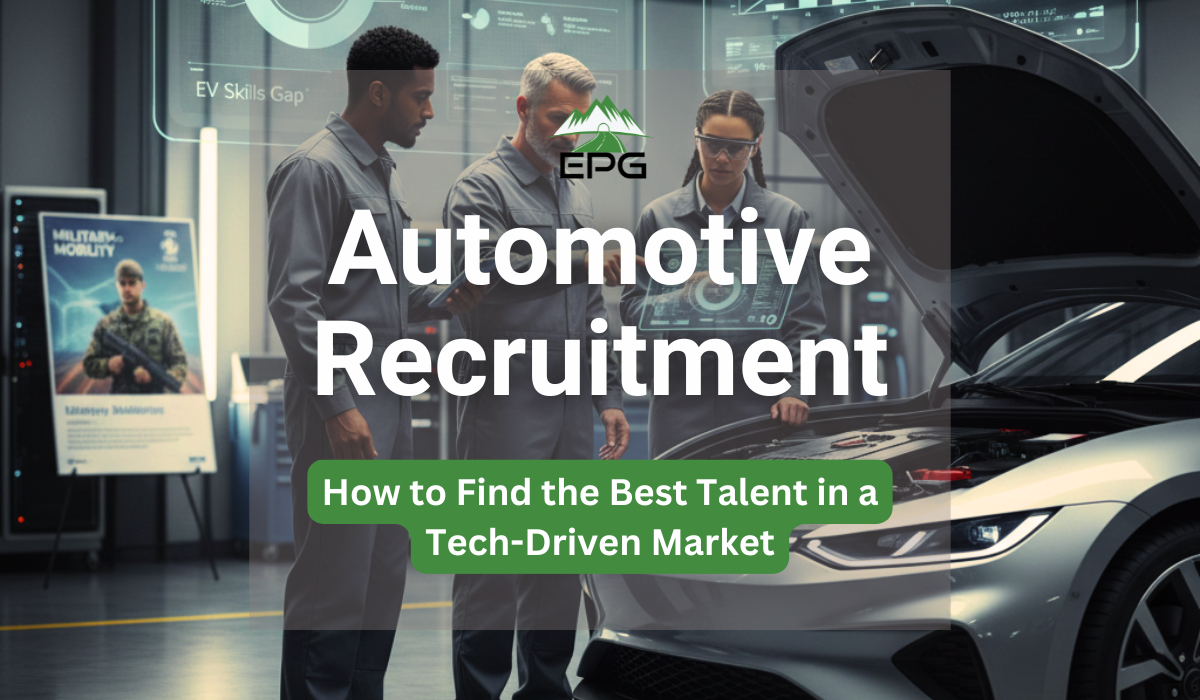
Automotive Recruitment: How to Find the Best Talent in a Tech-Driven Market
AI Snapshot: Automotive Recruitment Trends 2026
The Talent Shift: As vehicles transition to Software-Defined architectures, recruitment has shifted from mechanical-only roles to a split between hardware and software expertise.
Critical Skill Gaps: The US industry is facing an annual shortfall of 37,000 technicians.
Top Sourcing Channels: Elite talent is moving away from general job boards. Successful firms are now sourcing through Military-to-Mobility pipelines and open-source developer communities like GitHub and Eclipse SDV.
The Bottom Line: To secure top-tier candidates in a stabilized market, firms must prioritize “trainability” and employer transparency to appeal to the Gen Z workforce.
As we move through 2026, the automotive industry has reached a pivotal “reset.” While vehicle sales have plateaued at roughly 16 million units annually, the internal complexity of those vehicles has created a talent war unlike any we have seen.
The modern vehicle is now a Software-Defined Vehicle (SDV). Success in today’s market is no longer just about moving metal; it’s about recruiting the minds that can manage the convergence of AI, high-voltage systems, and advanced connectivity. Whether you are a Tier-1 supplier or a high-volume dealership, your ability to secure specialized talent is your primary competitive lever.
The 2026 Talent Gap: Data-Driven Insights
To understand the urgency of automotive recruitment today, we must look at the data. Recent reports indicate a widening chasm between traditional mechanical roles and the digital expertise required for modern fleets.
| Role Category | 2026 Scarcity Rating | Key Skill to Screen For | Why it Matters |
| SDV Software Engineer | Critical | C++, Python, & RTOS | Vehicles now rely on “Over-the-Air” (OTA) updates for 40% of their functionality. |
| High-Voltage Technician | High | BMS & Power Electronics | A shortfall of 37,000+ trained techs exists annually to service hybrid/EV fleets. |
| ADAS/AI Architect | Critical | Sensor Fusion & Computer Vision | CES 2026 saw a massive shift toward “Physical AI” and predictive co-pilot systems. |
| Service Advisor | Moderate | Digital CRM & Transparency | With plateaued sales, 60% of dealership profit now relies on retention and service trust. |
Understanding the “Rolling Computer” Era
The shift toward SDVs means that automotive companies are now competing with Silicon Valley for the same talent pool. Recruitment is no longer about finding a “car person”; it’s about finding a “systems person.”
-
From Hardware to Software: In 2026, software quality and update speed are the decisive factors in brand loyalty.
-
The Hybrid Moment: While BEV adoption has seen a pragmatic slowdown, Deloitte’s 2026 Consumer Study shows a massive surge in Hybrid (HEV) interest. Your team must be fluent in both internal combustion (ICE) and electrified powertrains.
-
The Technician Shortage: NADA estimates that the industry needs to replace 76,000 technicians annually, but only half that number are graduating from trade programs.
The 2026 Sourcing Map: Where to Find Elite Talent
In a market where “A-Players” are rarely browsing traditional job boards, your automotive recruitment strategy must go where the talent lives. Based on 2026 hiring trends, here are the most effective channels:
1. The “Military-to-Mobility” Pipeline
Military veterans are the “hidden gem” of automotive hiring. Programs like the U.S. Army’s Shifting Gears and the DoD SkillBridge internships provide a steady stream of candidates with the disciplined mechanical aptitude and electronics training required for modern vehicles.
-
Why it works: Veterans often possess specialized training in high-voltage avionics or heavy equipment maintenance that mirrors modern EV/AV architectures.
2. Open-Source & Developer Communities
For Software-Defined Vehicle (SDV) roles, traditional resumes are secondary to proof of work.
-
GitHub & Stack Overflow: Look for contributors to automotive-specific projects like Automotive Grade Linux or Eclipse SDV.
-
Hackathons: Participate in or sponsor local tech hackathons focusing on V2X (Vehicle-to-Everything) communication and cybersecurity.
3. Specialized Industry Hubs
Avoid the “noise” of generalist sites. High-intent candidates gravitate toward niche ecosystems:
-
AUTOjobs.com & NeedTechs.com: The gold standards for finding “old school” mechanical talent that has been upskilled for the digital age.
-
TechForce Foundation: An essential partner for reaching the next generation of technicians currently in trade schools.
Strategies for Finding Top Automotive Talent
In a market where “A-Players” are rarely looking at job boards, your strategy must be proactive and multi-faceted:
-
Look Beyond the Industry: Recruit from IT, gaming, and telecom. The skills required for a “Digital Cockpit” are often found in consumer electronics, not traditional manufacturing.
-
Focus on “Trainability”: Hire for the ability to learn complex systems rather than 20 years of static experience.
-
Leverage Specialized Partners: Generalist recruiters often struggle to vet a candidate’s understanding of CAN bus protocols or ISO 21434 cybersecurity standards. Use a niche partner like EPG that speaks the language of both EVs and traditional automotive engineering.
Frequently Asked Questions
1. What is the biggest challenge in automotive recruitment in 2026?
The “Information Gap.” Most candidates are skilled in either mechanical engineering or software development, but rarely both. Bridging this gap through strategic hiring and internal upskilling is the number one priority for HR leaders this year.
2. Is the technician shortage getting better?
Unfortunately, no. While interest in trade schools is rising, the retirement rate of Baby Boomer technicians is currently outstripping that of new graduates. This is why “Employer Branding” and competitive “Total Rewards” packages are essential for retention.
3. How is AI affecting automotive hiring?
AI is a dual force. It is being used to screen candidates faster, but it’s also a key skill within the car. We are seeing a 20% increase in demand for engineers who understand “Agentic AI” for smart manufacturing and in-cabin diagnostics.
4. Should we still focus on EV recruitment if sales are stagnating?
Yes. Even as market growth stabilizes, the infrastructure and maintenance requirements are permanent. Furthermore, the high-voltage skills required for EVs are directly transferable to the surging Hybrid market.
Partner with EPG to Build Your Future
The automotive sector is no longer a “traditional” industry—it is a technology-first ecosystem. At EPG, we combine our deep roots in EV/AV innovation with a comprehensive understanding of the general automotive market to help you find the talent that will drive your business into 2027 and beyond.
Ready to discuss the latest hiring trends or secure your next key hire?
-
Fill Out Our Talent Inquiry Form
About the Author: EPG