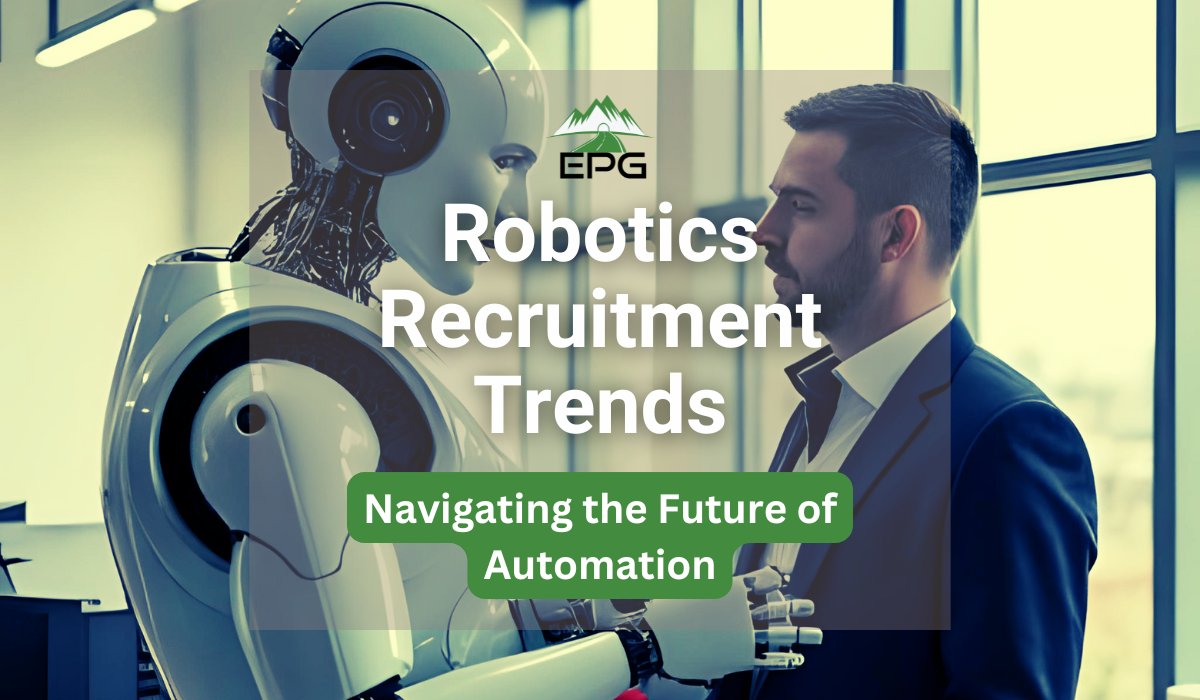
Robotics Recruitment Trends: Navigating the Future of Automation
Introduction
The robotics and automation industry is experiencing unprecedented growth, transforming everything from manufacturing floors to healthcare delivery. As this sector accelerates, the demand for high-tier technical talent has never been higher. EPG, leveraging years of expertise in high-growth technology sectors, is expanding our focus to help you navigate the complex robotics recruitment trends and challenges in this rapidly evolving landscape.
Key Robotics Recruitment Trends
To stay competitive, companies must understand the forces shaping the labor market. Here are the primary trends we are seeing today:
Trend 1: The Integration of AI and Machine Learning
Robotics is no longer just about mechanical engineering. The infusion of Artificial Intelligence (AI) and Machine Learning (ML) has created a surge in demand for “hybrid” engineers. Candidates who can bridge the gap between physical hardware and intelligent software are the most sought-after professionals in the current market.
Trend 2: The Multi-Disciplinary Skills Shortage
As automation technologies leap forward, traditional educational pipelines are struggling to keep pace. We are seeing a significant skills gap in specialized areas like ROS (Robot Operating System), computer vision, and sensor fusion. This shortage means that robotics recruitment trends are shifting toward “accommodative hiring”—where firms look for foundational excellence and invest heavily in internal upskilling.
Trend 3: The Rise of Collaborative Robots (Cobots)
The shift from isolated industrial robots to collaborative robots (cobots) that work alongside humans has changed the talent profile. Employers are now looking for engineers and UI/UX designers who prioritize human-robot interaction (HRI) and safety compliance, ensuring that automation enhances the human workforce rather than just replacing it.
Trend 4: Decentralized Engineering Teams
While hardware development often requires a physical presence, the software and simulation side of robotics has embraced the remote work revolution. Companies are now sourcing global talent for simulation, digital twin development, and cloud-based fleet management, allowing them to bypass local talent shortages.
Challenges in Robotics and Automation Recruitment
Attracting Talent in a Cross-Industry War
Robotics firms aren’t just competing with each other; they are competing with Big Tech, Automotive, and Defense. Attracting top-tier talent requires more than just a high salary—it requires a compelling vision, cutting-edge projects, and a culture of innovation.
Bridging the Specialized Expertise Gap
Finding a candidate who understands both the torque requirements of a robotic arm and the latency issues of a remote control system is difficult. Recruiters must have a deep technical understanding to vet candidates effectively and ensure they meet the specific needs of the project.
Speed of Hire vs. Quality of Hire
In a fast-moving market, a slow hiring process can result in losing a star candidate to a competitor. However, a “bad hire” in a high-stakes engineering role can set a project back by months. Balancing speed with rigorous vetting is the primary challenge for modern automation firms.
Conclusion
The automation landscape is shifting daily, and your hiring strategy must be just as dynamic. By staying ahead of robotics recruitment trends and addressing the skills gap head-on, your company can secure the innovators needed to lead the next industrial revolution.
Frequently Asked Questions (FAQs)
1. What are the most important robotics recruitment trends to watch this year?
The most significant trends include the rising demand for AI/ML integration within robotics, the growth of the “Cobot” market, and an increased focus on “Green Automation” to improve energy efficiency in manufacturing.
2. Why is it so difficult to find robotics engineers right now?
The industry is growing faster than the talent pool. Additionally, robotics requires a niche blend of mechanical, electrical, and software engineering, making “full-stack” robotics engineers incredibly rare.
3. Can EPG help with specialized roles like Computer Vision or ROS Engineers?
Yes. EPG specializes in identifying and placing niche technical talent. We have a deep network of professionals skilled in ROS, C++, Python, and various automation frameworks.
4. Does EPG offer contract staffing for short-term automation projects?
Absolutely. We offer Executive Search, Contract Staffing, Contract-to-Permanent, and Direct Hire services to fit the specific lifecycle of your project.
How Can EPG Help?
EPG is a premier recruiting firm with a deep understanding of the high-tech industrial sector. We are proud to bring our proven recruitment methodology to the robotics and automation space. We offer a range of services to help you find the talent that will drive your company forward:
-
Executive Search (C-Suite and VP levels)
-
Contract Staffing (Flexible scaling for specific projects)
-
Direct Placement/Hire (Building your long-term core team)
-
Contract-to-Permanent (Ensuring the right fit before the long-term commitment)
Ready to build the future of automation? Whether you want to discuss current hiring trends, need a customized recruitment strategy, or are looking to fill a critical role immediately, we want to hear from you.
Schedule a Call with Our Robotics Experts | Fill Out Our Inquiry Form
About the Author: EPG